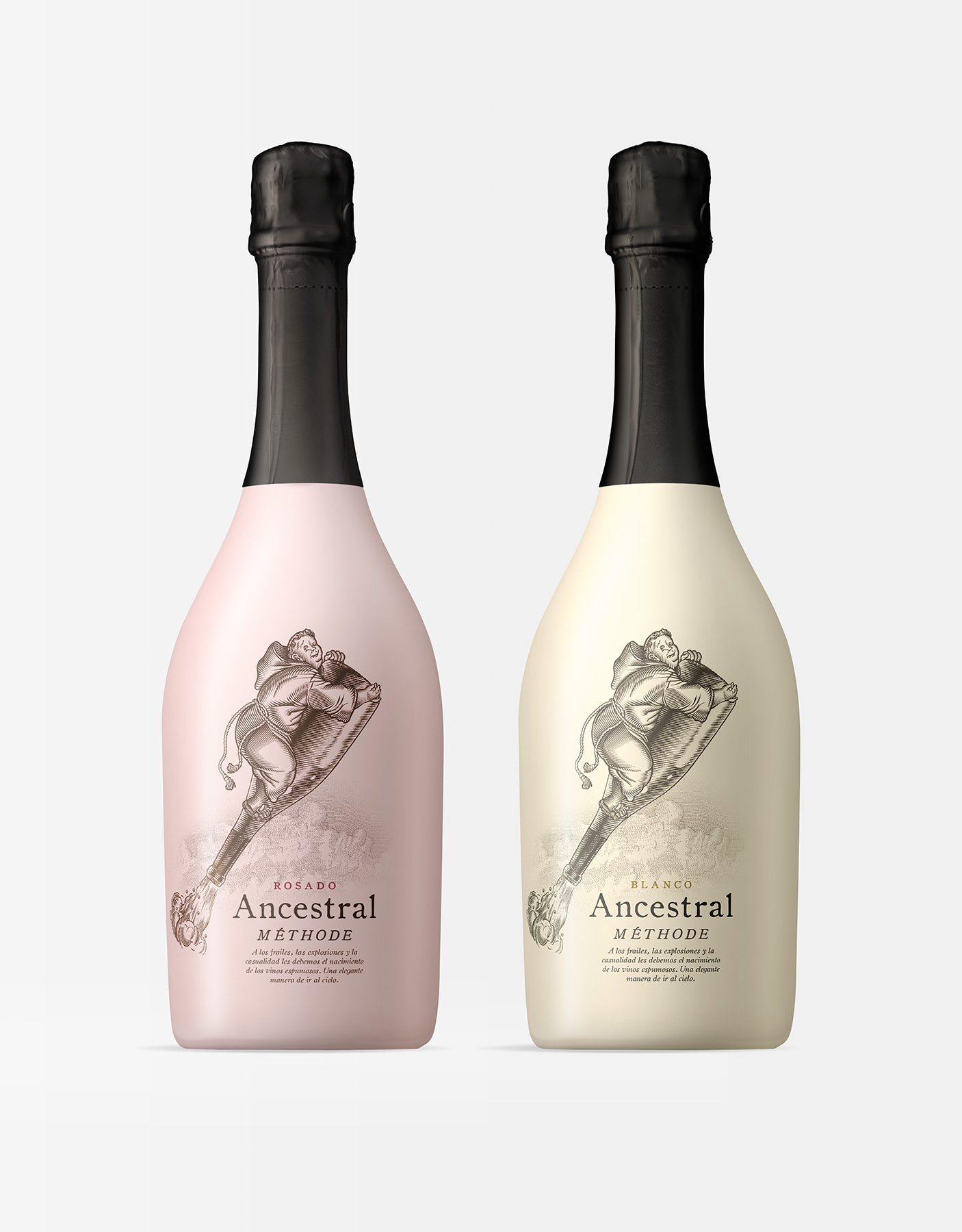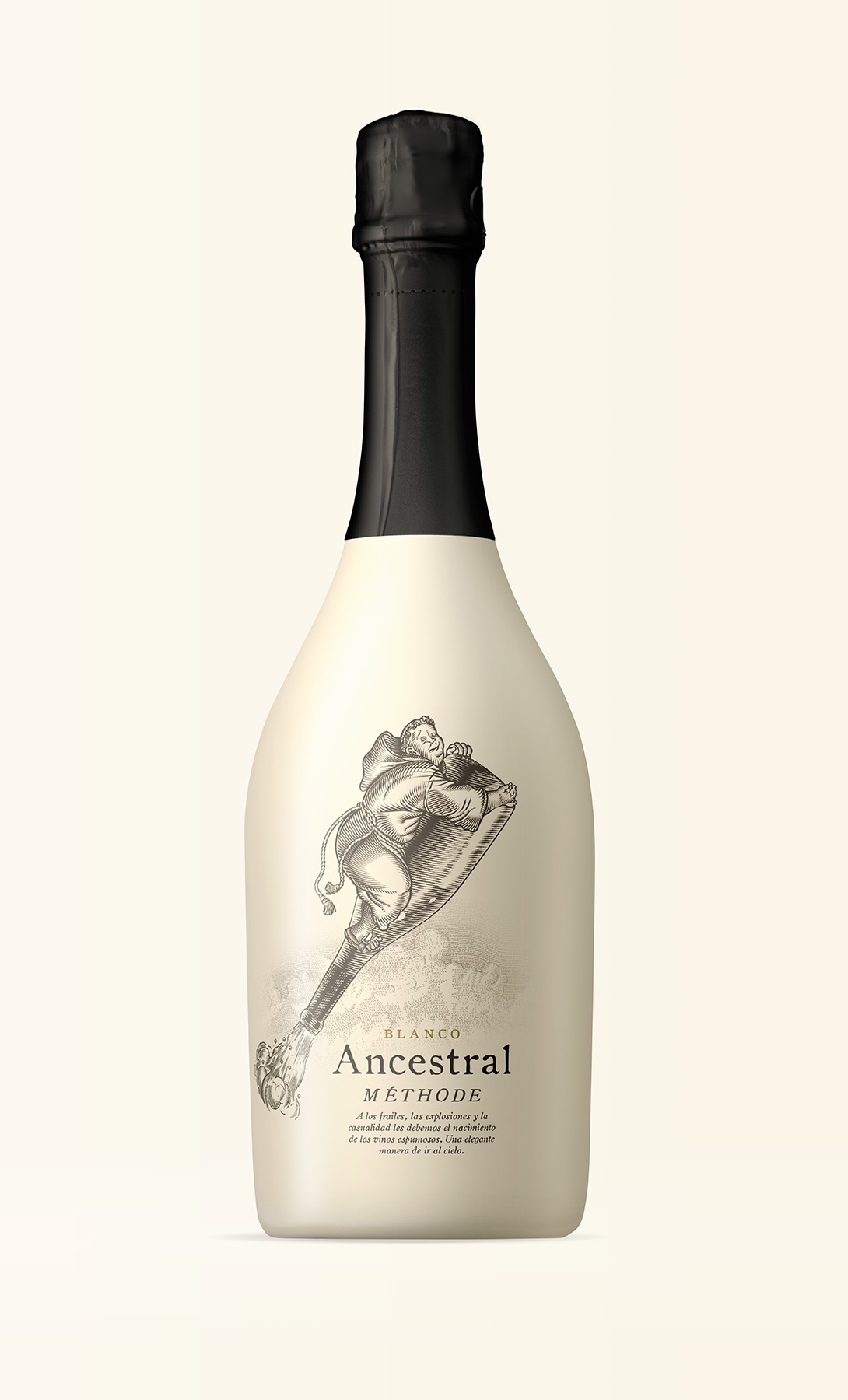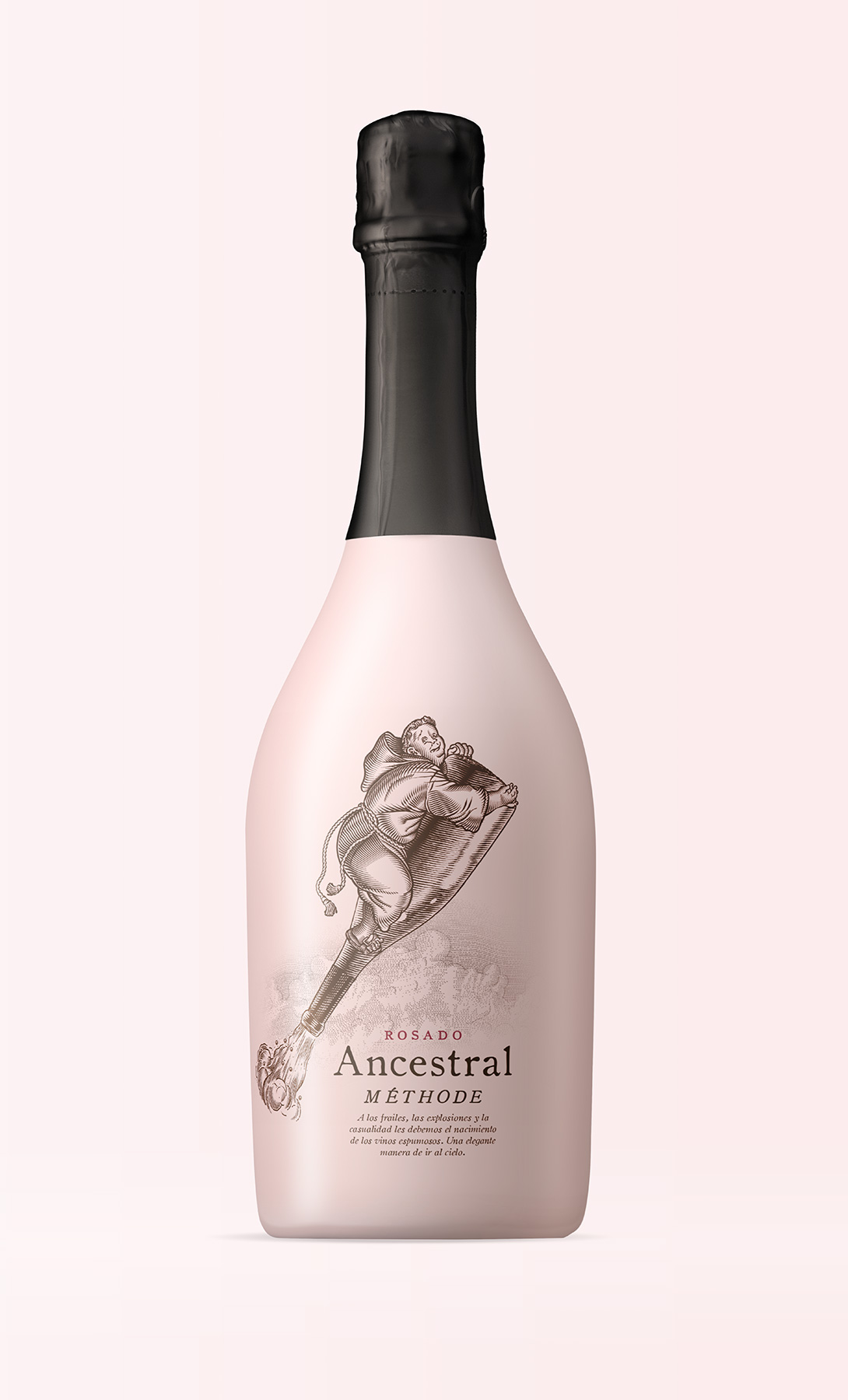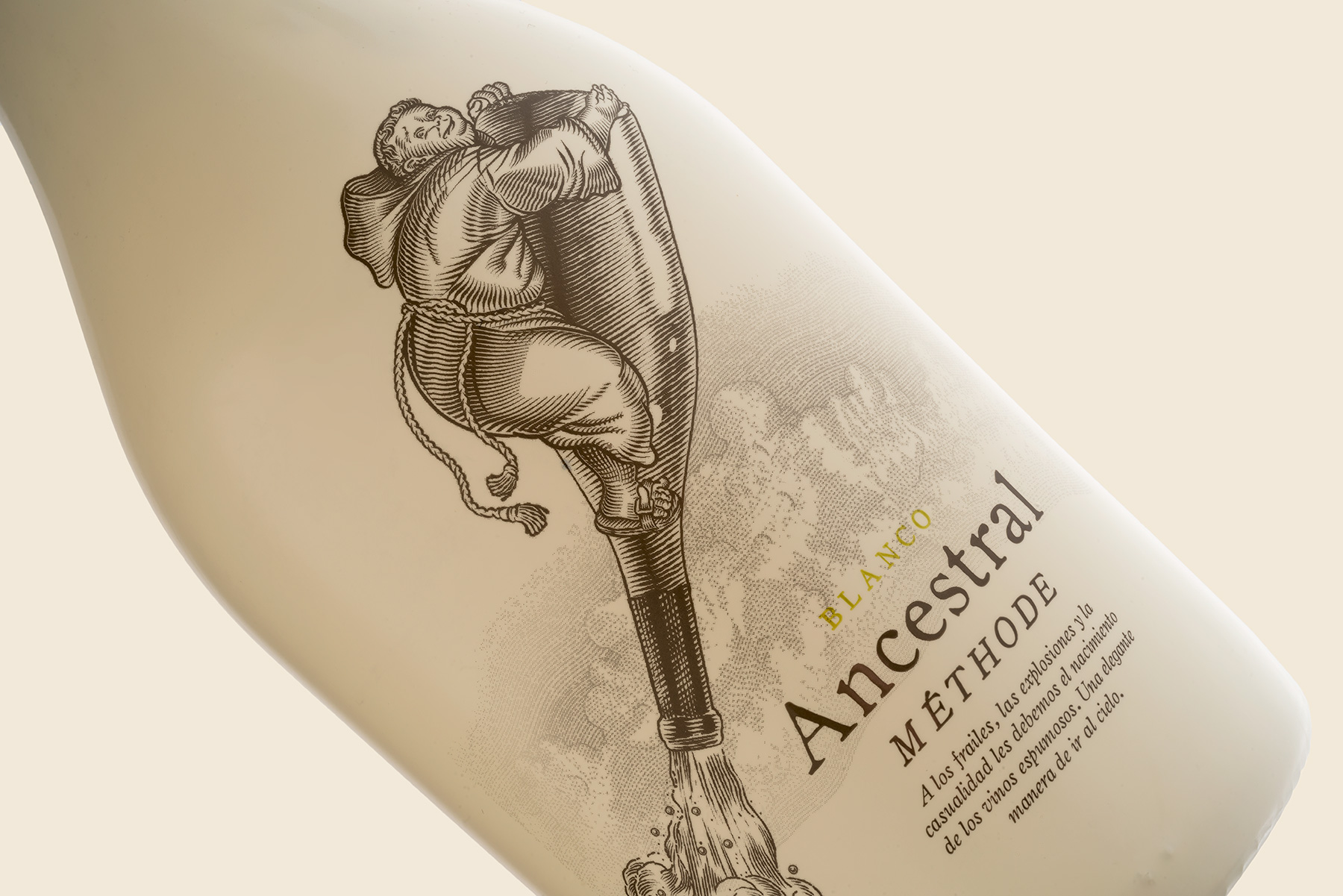
In very cold regions, the arrival of winter once halted the fermentation of grape must before it could be bottled. When spring arrived, fermentation would resume inside the bottle, producing gas, and the bottles—still not made of the glass-and-cork combination we know today—would often explode. Nevertheless, some remained intact, and thanks to this accident a new kind of wine was discovered: sparkling, extraordinary, and entirely the result of chance.
The ancestral method was the first to be conceived and forms the basis of the traditional method used today to produce exceptional Champagne and cava. Unlike the latter, in the ancestral method the wine is bottled before the first fermentation has finished, allowing fermentation to be completed in the bottle and resulting in natural carbonation.
The outcome is a fresh, playful, surprising sparkling wine. Undoubtedly, it was born of chance—like all great inventions—combined with the ingenuity of shrewd monks, always ready to edge a little closer to heaven for a good cause.