


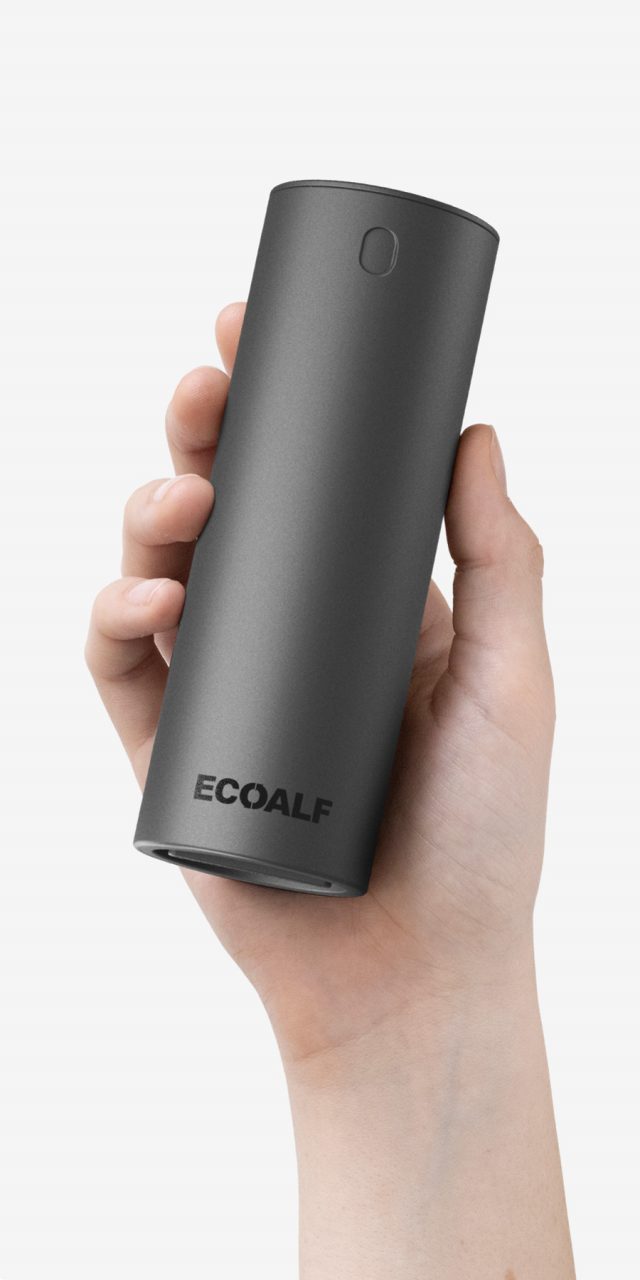
Ecoalf Wellness
Ecoalf is a Spanish sustainable fashion brand that uses fabrics and materials made from plastic waste collected from the sea. In 2022, the brand decided to launch a personal care line. It was clear that this new range had to align with Ecoalf’s environmental commitment and positioning. Our involvement went beyond packaging design: we participated from the outset in product concept and development, working closely with the marketing, production, and formulation teams to identify the most environmentally responsible solutions.
The result is a line of multifunctional products made with eco-friendly ingredients and processes, including solid and powder formats that eliminate the need for water. By removing water from the formulations, both weight and CO₂ emissions during transportation are significantly reduced. This approach allowed us to dispense with plastic bottles and opt for lighter, more sustainable packaging. All products are designed to be used with specially developed reusable aluminium containers. The packaging—both for the aluminium containers and for the products themselves—is made from eco-friendly materials, including recycled cardboard, compostable pouches, and cellulose pulp. Graphics play a key communicative role, explaining the purpose and functionality of each item and of the range as a whole, making it easier for consumers to make environmentally conscious choices.
For this launch, Ecoalf partnered with RNB, a cosmetics group with a pharmaceutical background and more than 30 years of experience in the sector.
According to a study conducted by the technological institute ITENE, the range achieves a 74% reduction in CO₂ emissions and a 70% reduction in water consumption compared to equivalent conventional products over one year of use.
Photography: L&C, Ernesto Sampons, Daniel Molina
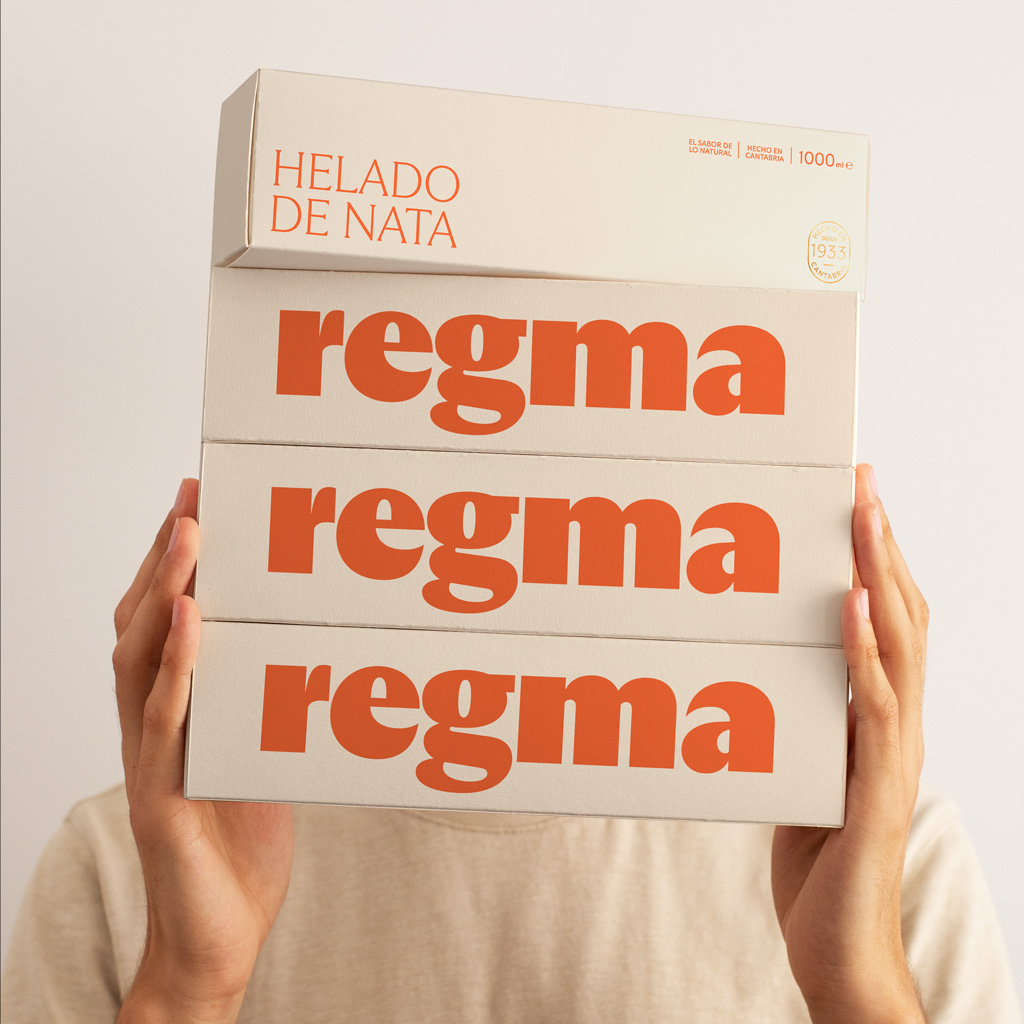
Regma
Regma is an ice cream and pastry chain with more than 200 points of sale and over 90 years of history, holding a leading position in Cantabria and enjoying strong recognition in other regions of northern Spain. Its core values are quality, honesty, 100% natural products, and traditional recipes. The company is currently seeking to expand its presence in supermarkets and large retail stores, beyond its own outlets. This growth objective has highlighted the need to update and strengthen the brand’s image in order to better connect with a younger audience and adapt its packaging to the demands of retail shelves.
Our work focused on modernising the logo, giving it greater strength and personality. The new identity is more vibrant and memorable, and the redesigned logo can be applied in large formats as the key visual element of the packaging. In addition, communication materials were redesigned, with particular attention paid to point-of-sale materials (POS). The product packaging was also updated to achieve an iconic, easily recognisable design that meets the requirements of different sales channels: own stores, supermarkets, large retail outlets, and online sales.
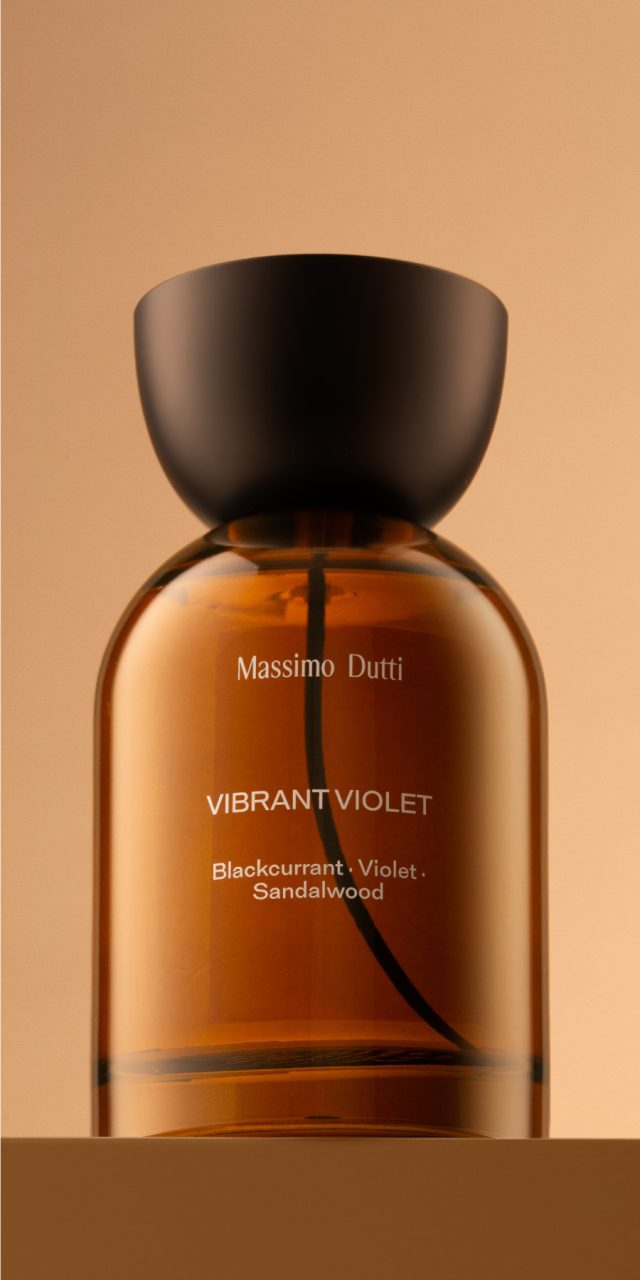
Massimo Dutti Blooming
With Blooming, the brand set out to create a new fragrance family with its own distinctive codes, opening the door to a slightly more daring olfactory world and elevating the image of perfumery—particularly at the point of sale.
This family of women’s fragrances is based on floral notes, which inspired the name of the collection. The client’s brief called for a warm visual identity, with amber as the main colour and an elegant, timeless aesthetic. The semi-sphere—or semi-circle—used as a floral icon is the geometric form that structures the entire packaging.
We chose a bottle with rounded shoulders and designed a bespoke stopper specifically for it. The distinctive feature of the container’s silhouette lies in the inverted curves of both the bottle’s shoulders and the stopper. A black tube adds a unique touch while echoing the colour of the stopper. The box is encased in a sleeve that features, on its lower section, a die-cut reproducing the characteristic semicircular shape of the design.
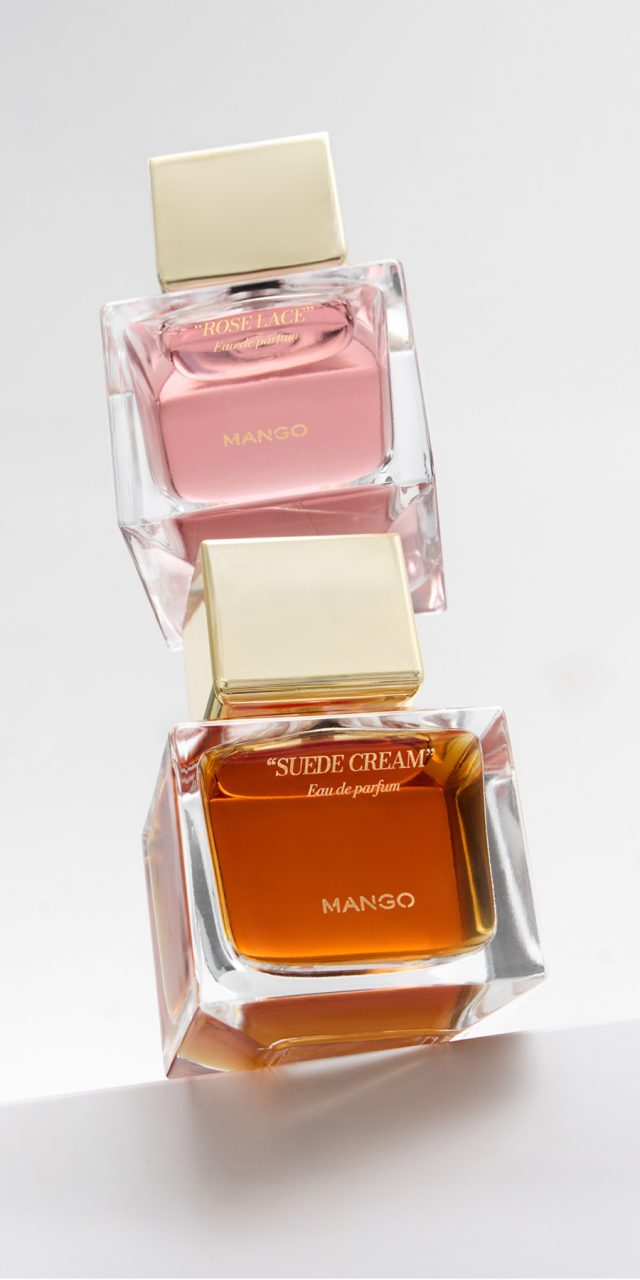
Les Icônes
Mango entrusted us with the design of its new women’s fragrance collection: Les Icônes.
This line is created for the contemporary woman, aged between 35 and 50, who seeks a fragrance that is modern, distinctive, and accessible—able to express personality while remaining approachable.
The bottle has a compact, balanced shape. The thick glass base conveys solidity and quality, while its simple, recognisable silhouette makes it easy to identify and pleasant to hold. Each fragrance is distinguished by a colour that reflects its character, with transparent glass and a golden cap adding a touch of elegance.
The packaging, in matte white with golden details, conveys sobriety and harmony with the bottle, enhancing the overall perception and turning the product into a desirable object—also perfect for gifting.
Photography: Sonia Sabnani
Gocco
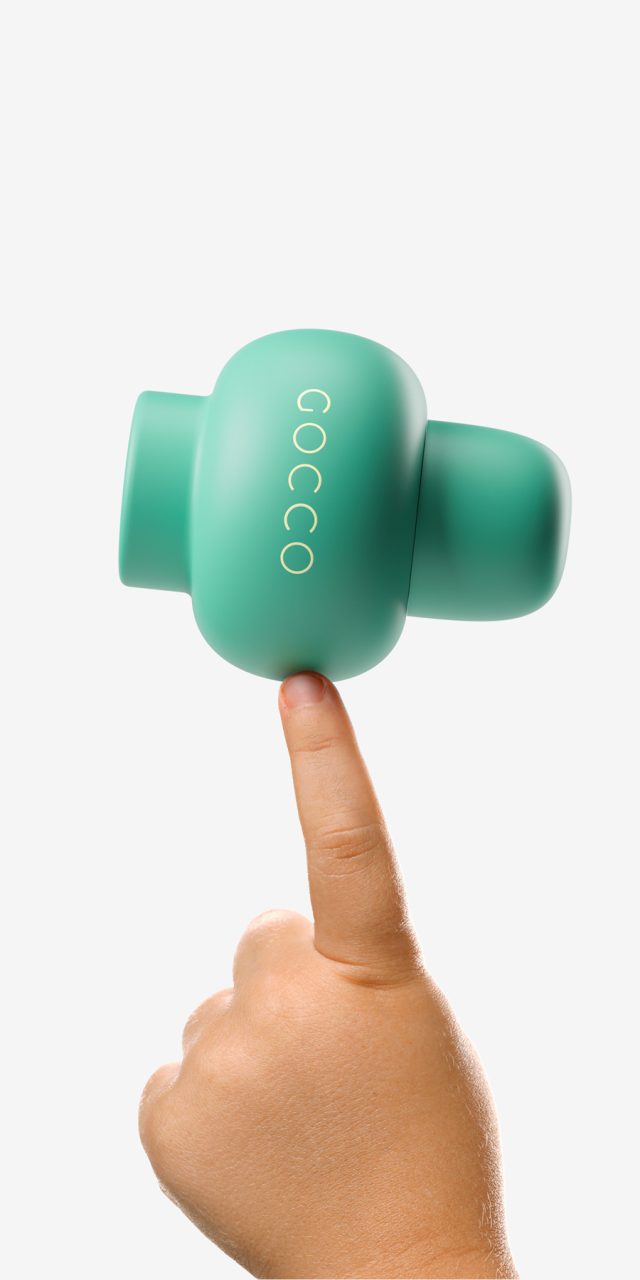
Gocco, the Spanish brand specialising in children’s and youth fashion, ventured into a new territory: fragrances for boys and girls aged 2 to 6.
Our proposal was to create a design that encourages play while maintaining a contemporary and refined aesthetic—one that sparks curiosity at first sight.
The SuperOrange and SuperGreen bottles break away from the clichés of children’s perfumes, drawing inspiration from the tactile, the volumetric, and the sensory. With their smooth, rounded shapes, they establish a natural connection with young children, avoiding the usual stereotypes: the bottle does not depict anything specific—it is neither an animal nor a television character. Instead, it is an object open to each child’s imagination. Today it may be a submarine; tomorrow, a spinning top—or even a gentleman with a hat.
Colour reinforces this identity: the vibrant orange of SuperOrange and the deep green of SuperGreen convey energy and character, while the packaging graphics complete the ensemble with dynamism and coherence.
The result is a contemporary, stimulating, and functional design that embodies the essence of the brand while inviting children to imagine stories and play without limits.
U/1ST
U/1ST was created with the purpose of developing a makeup line whose properties and ingredients care for the skin, going beyond a purely aesthetic approach.
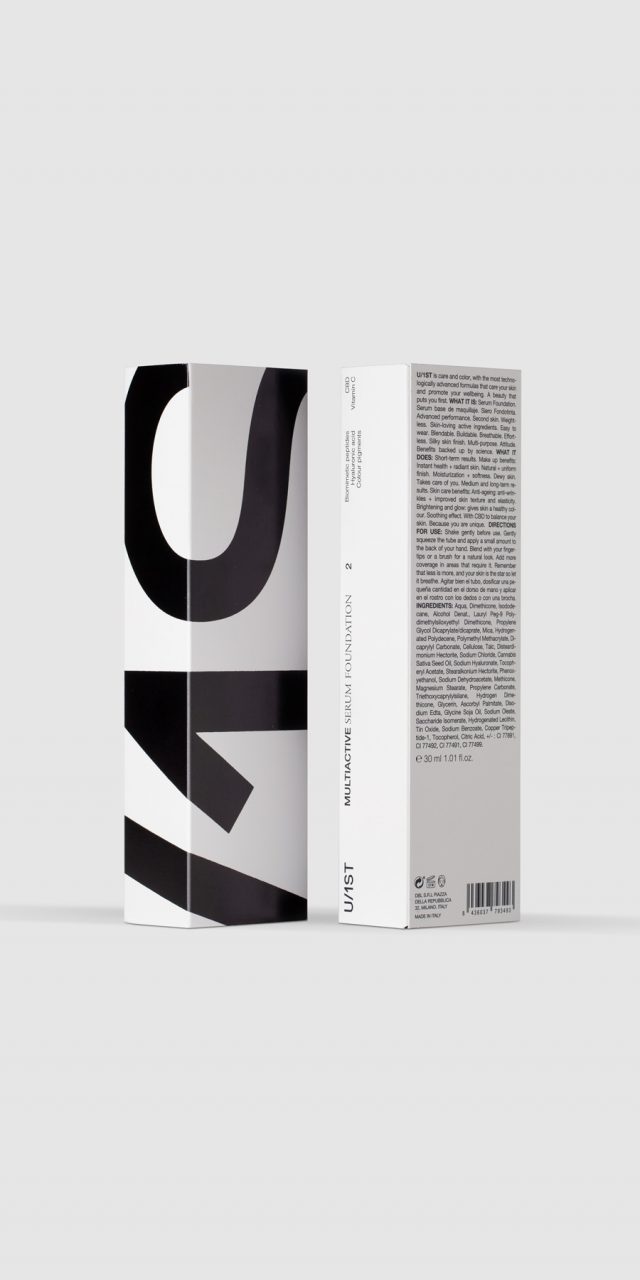
The products are designed for active, confident, and straightforward individuals who seek practical and realistic solutions. The logo, overflowing beyond the edges of the boxes, reflects this personality: powerful, even challenging. This attitude is evident not only in the packaging design but also in the brand’s presence across the web, social media, and all visual communication.
The logo is set in a sans-serif typeface that complements the advanced technology behind the products. It is presented in black on white, as the strong contrast enhances its visual impact and sets the brand apart from more conventional solutions, which often rely heavily on colour, particularly in competitors’ packaging.
A bespoke typographic system was also developed, combining a sans-serif typeface—suggestive of technology and modernity—with a serif typeface that feels closer to the world of beauty. This combination establishes hierarchy and guides the reading of the messages.
In the box design, two sides feature an oversized logo, while the other two carry the product descriptor and additional information. This structure allows the brand to choose which side faces the shelf: the most eye-catching and emotional, the more informative, or a balance of both.
Photography: L&C, Ernesto Sampons, Daniel Molina, Estudio Catorze